



Architectural Stealth: How This Tiny Barcelona Pad Delivers Huge Design Impact at 312 Sq Ft
Forget everything you thought you knew about small living. In Barcelona’s bustling Sants neighborhood—a historic Catalan quarter with a distinct vibe—a 1930s modernist building just saw a radical transformation. We’re talking about a mere 29-square-meter, or 312 square feet, apartment that’s been flipped from neglected to a masterclass in functional, eye-popping design. The challenge for the fashion designer owner and Estudio Dott was simple: pack every home function into this compact footprint without chopping it up. The outcome? Pure, unadulterated genius.
The Ultimate Space-Saving Secret? One Piece Does It All!
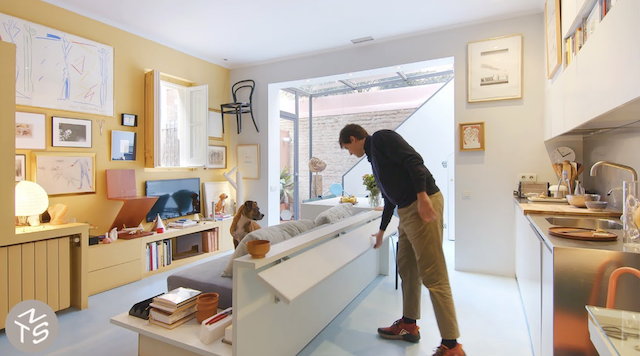
The linchpin of this design strategy? Estudio Dott’s bold move to implement a single, continuous piece of natural oak furniture. This isn’t just a design element; it’s the apartment’s functional backbone, seamlessly shifting its utility as you navigate the space. Picture this: living and dining zones strategically placed by the balcony, the sole source of natural light. This intelligent layout gives the bedroom a distinct, private feel, sans actual walls. And for storage? The bed features a built-in storage base, with its headboard cleverly concealing original kitchen pipes, now repurposed as a sleek display for books and a projector. Adjacent to the bed, a full-height wardrobe handles all clothing storage. It’s a prime example of how custom furniture is essential for maximizing storage in tight quarters.
High Design, Smart Budget
Here’s a critical takeaway: high design doesn’t demand a high budget. The owner, a self-described furniture collector, largely furnished the apartment with second-hand pieces, proving that personality and style are attainable without breaking the bank. Consider the glass dining table: a deliberate choice to maintain visual lightness, ensuring it doesn’t ‘block’ the compact space. It’s complemented by classic Cesca chairs, and a wall lamp with a swinging arm provides adaptable illumination. For hosting—a common need for Argentinians like the owner who host family and friends—a Danish design sofa bed by Softline is the centerpiece, offering both comfort for daily use and easy accommodation for guests. An original 1960s Kilta chair on wheels adds versatile extra seating, easily movable to the sofa area when needed. Even the workspace, a continuation of the kitchen line, features a substantial desk.
Unearthing History: The Apartment’s Stunning Comeback
Perhaps the most compelling aspect of this project was the unearthing and restoration of the building’s original soul. The apartment was in rough shape, with its stunning Catalan vault and wooden beams buried under plaster and a dark, glossy varnish. Peeling back the layers revealed an “amazing ceiling”! The team made the critical decision to restore these elements, re-establishing the home’s character and honoring its Spanish architectural lineage. To truly make the Catalan vault pop, wall lights were strategically installed between the wooden beams. The old floating floors were ripped out, replaced with sleek micro cement, imparting a sense of calm and a decidedly minimalist vibe throughout.
Small Kitchen, Big Ideas
Even the kitchen and bathroom, often pain points in compact designs, received intelligent solutions. In the kitchen, the choice to forgo upper cabinets maintains an open, airy feel above the counter, paired with a cooktop featuring a quiet, integrated extractor. Light-colored splashback tiles from Spanish brand EQUIPE allow personal items to stand out and reinforce the bright aesthetic. The bathroom, constrained by its original compact footprint due to budget, saw superficial updates. However, a crucial move: relocating the water heater significantly boosted its sense of space and natural light, with existing windows providing ventilation.
Ultimately, this Barcelona apartment isn’t just a place to crash; it’s a blueprint for maximizing impact in minimal space. It embodies a core philosophy: “less, but well-thought-out objects”—pieces that are both beautiful and genuinely functional. The project also underscores a commitment to environmental responsibility, prioritizing the preservation of original materials. By embracing the Japanese concept of finding beauty in imperfection, the design team embraced the natural wear of materials, acknowledging that true perfection is elusive and impermanent. This apartment stands as a powerful case study: creative design, precise restoration, and a relentless focus on functionality can transform any compact area into an open, highly livable, and undeniably cool sanctuary.